 Tablecloth
 Embers
 Bodega
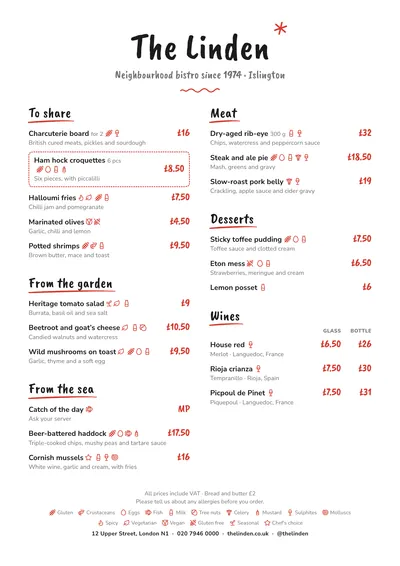 Chalkboard
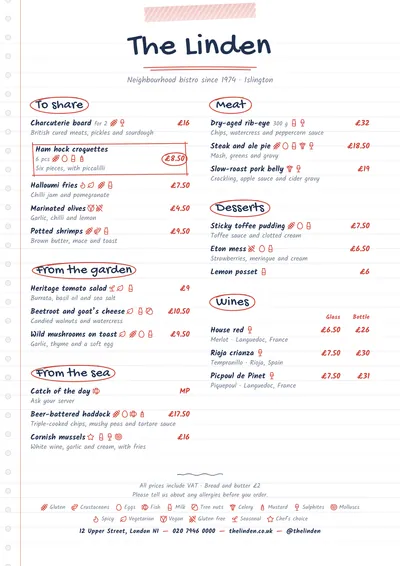 Notebook
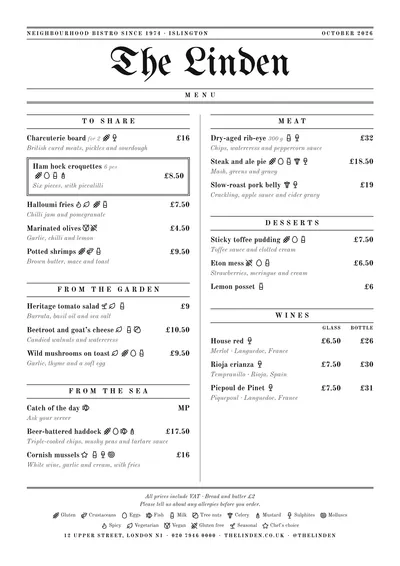 Gazette
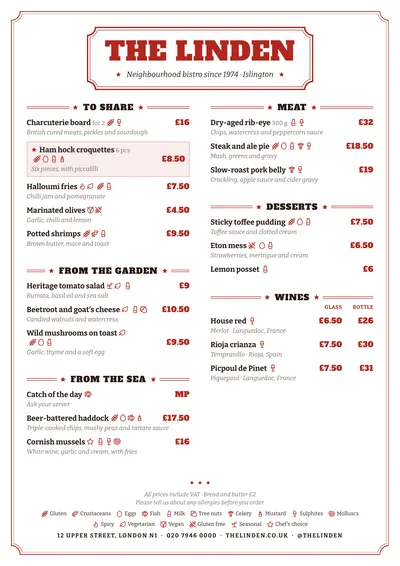 Vermouth
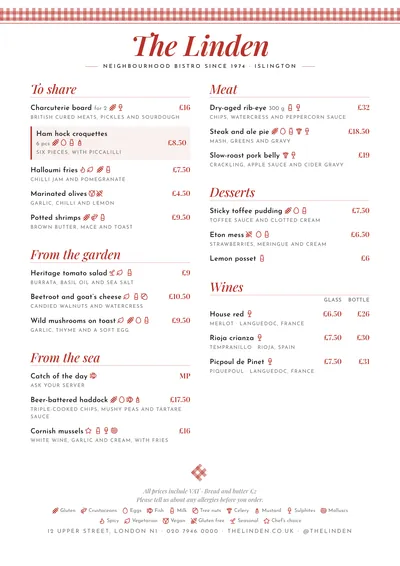 Trattoria
What defines a rustic menu
Sturdy type. Robust serifs, square-serifed slabs and, for the name or the specials board, a brush or handwritten face. Nothing hairline-thin, no high-contrast romans.
Kitchen colours. Tablecloth red, wine maroon, ember orange, browns, olive green. On white or cream paper.
Craft ornament. Gingham checks, a bunch of grapes, a flame, waves, rules. Few, and simple.
Dot leaders. The lines running to the price belong to old-fashioned menus and help on long menus with lots of similar dishes.
Materials. A wooden board, a leather or cloth cover, a clip. The holder brings the rustic feel; the paper can be simple.
Mistakes that make it look careless
- Printed wood or parchment backgrounds. They read badly and use a lot of ink. Keep the wood for the board.
- Clip art everywhere: cows, grapes, hams and casserole dishes.
- Wild West type for all the text. One heading with character is enough.
- Prices corrected in biro or with correction fluid. If a price changes, reprint.
- Glossy lamination that reflects the lamps.
- Spelling mistakes and dishes written two different ways.
How to write the dishes
Here the old names rule: steak and ale pie, shepherd’s pie, ham, egg and chips, faggots and peas, bread and butter pudding. They don’t need dressing up. What does help:
- Origin, if you have it: “Stornoway black pudding”, “Aberdeen Angus rib-eye”.
- Quantity: “6 pieces”, “for two”, “about 1 kg”.
- Price by weight, written as it is: “£9.50 per 100 g” or “£65/kg”. If a dish really changes with the market, give the price per kilo so guests know before they order.
- Specials in their own section or on a board, so you can change them without redoing the whole menu.
Avoid diminutives and brochure adjectives: “our delicious homemade little fishcakes” becomes “homemade smoked haddock fishcakes”, which says the same with more craft. And if the pub has been open for forty years or the pie is your grandmother’s recipe, say it once, in the subtitle or a section note, not on every line.
Traditional dishes hide plenty of allergens (flour in the batter and the gravy, milk in the white sauce, celery in the stock, sulphites in the wine for the sauce, mustard in the dressing). Mark them dish by dish.
Eight designs with a home-cooked feel
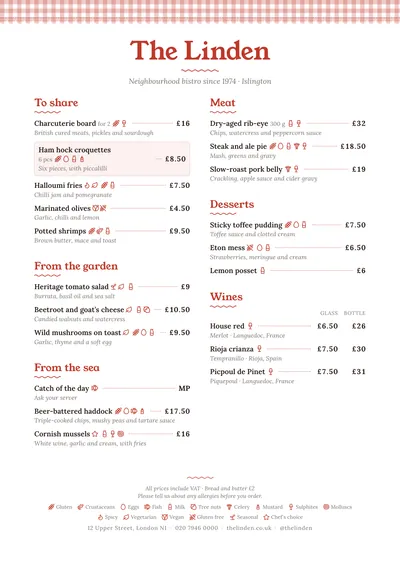
Tablecloth is the home-cooking café: red checks across the top, Young Serif, waves under the headings and dot leaders. It works as well for the main menu as for the daily menu.
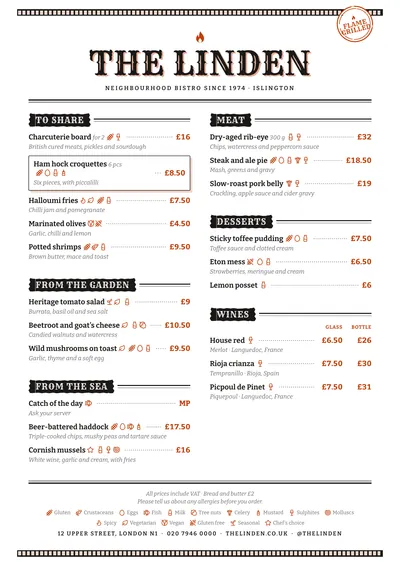
Embers is a grill menu: a gridiron, a flame above the name, an “off the grill” stamp and headings on rough planks.
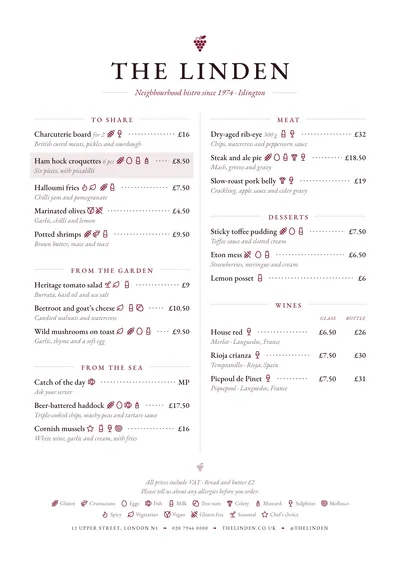
Bodega uses Garamond, a bunch of grapes and glass and bottle columns. For the wine list of a steakhouse or country inn, and for the food menu to match.
Chalkboard writes the daily menu in brush lettering, with the price circled by hand. The board by the door, but on paper.
Notebook looks jotted down on a lined notebook page, with a red margin and readable handwriting. For menus that change every day.
Gazette gives an old tavern’s menu the look of a period newspaper, in black on white.
Vermouth is a vermouth label: red slab type, stars and a double frame. For old-school bars.
Trattoria is Italian home cooking, with a gingham ribbon and red italics.
For a British pub, also look at Pub.
Daily menu and formats
In a home-cooking restaurant the daily specials matter as much as the main menu. Tablecloth, Chalkboard and Notebook are made for them: in A5, or two A5s per sheet to use half the paper, and as a 4:5 post to share every morning. The main menu goes in a two-column A4; if it’s long, in a booklet.
Compare every design in the menu designs gallery and go over the basic rules in restaurant menu design. To get the tablecloth red or the maroon right, see the guide to restaurant menu colours.
Frequently asked questions
Which font works best on a rustic menu?
A sturdy serif or a slab serif (with square-ended serifs) for the text, and something with more character, brush or sign-style, only for the name or the headings.
Should I use dot leaders up to the price?
On a long traditional menu, yes: they help the eye follow the line to the figure. Tablecloth, Embers and Bodega already have them.
How do I price meat sold by weight?
Write it as it is ('£9.50 per 100 g' or '£65/kg') and, if it helps, add the approximate weight of the cut or the days of dry-ageing in the description.