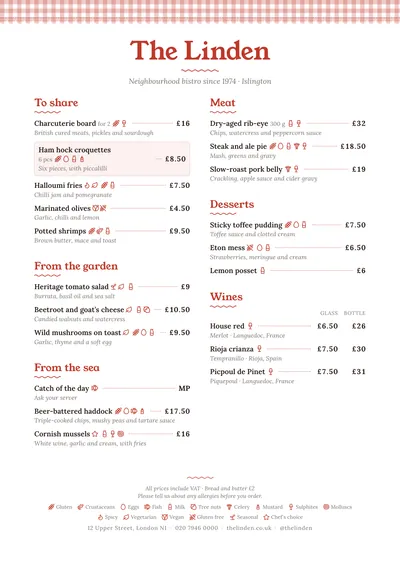
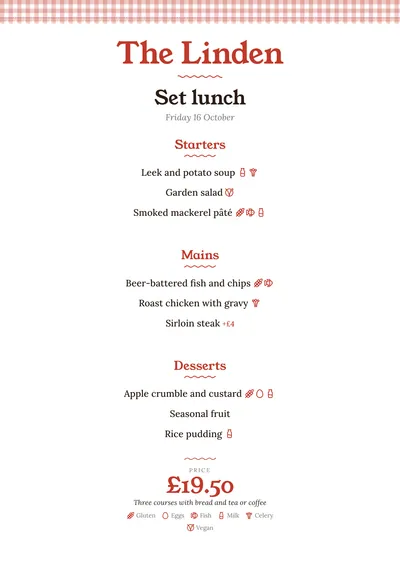
Gingham and waves
Tablecloth opens the page with a strip of red gingham. The venue’s name is set in Young Serif, a rounded, friendly serif, in red, with a wave underneath and the subtitle in italics. Each section title repeats the red wave, like a playful underline.
Dishes are set in Lora, a comfortable reading serif, with descriptions in italics. A fine line leads each dish to its price, as on traditional menus. A featured dish sits in a pink box with a dashed border.
An eating-house menu
This is the style for hearty, everyday cooking: stews, pulses, roasts, fish of the day, home-made puddings. Give dishes their familiar names (steak and ale pie, fish pie, sausage and mash) and add in the description only what the guest doesn’t know. The lines to the price help on long menus with lots of similar dishes.
If the dish of the day changes daily, keep a specials section and edit just that one; the layout adjusts itself.
Daily menu and formats
Tablecloth is also a daily menu style: the name in red, the title in dark Young Serif, the date in italics, a wave under starters, mains and desserts and the price large in red at the bottom.
- A4: for the menu.
- A5 or two A5s per sheet: for the daily menu; with two per sheet you use half the paper.
- A3 poster: at the entrance or in the window.
If you want something more informal for the daily menu, compare it with Chalkboard. To organise it, see the guide on how to make a set lunch menu.
Tips to get the most out of it
- Give your stews and pies their usual names (steak and ale pie, Lancashire hotpot, cottage pie) and explain only what isn’t obvious.
- If the dish of the day changes daily, keep a specials section and edit just that one.
- For the daily menu, two A5s per sheet saves half the paper.
- The gingham, the waves and the headings follow the accent: in green or blue the tablecloth changes colour with them.
Colours, fonts, columns and format can all be changed in the editor without losing the design. It works on A4, US Letter, slim A4, A5, booklet, tri-fold, A3 and images for social media.
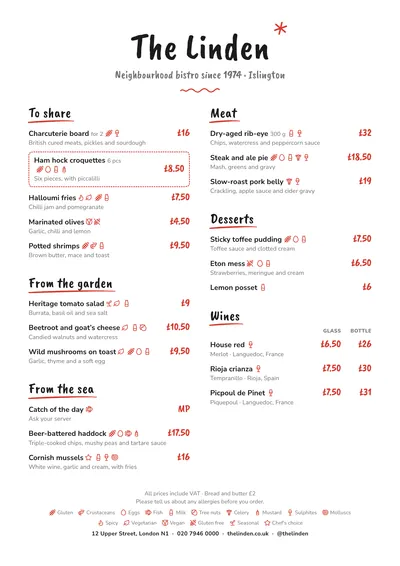 Chalkboard
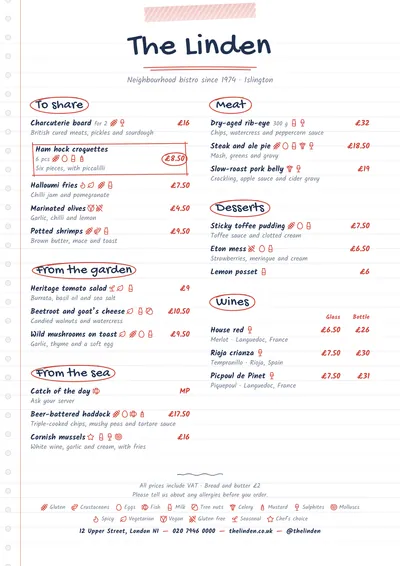 Notebook
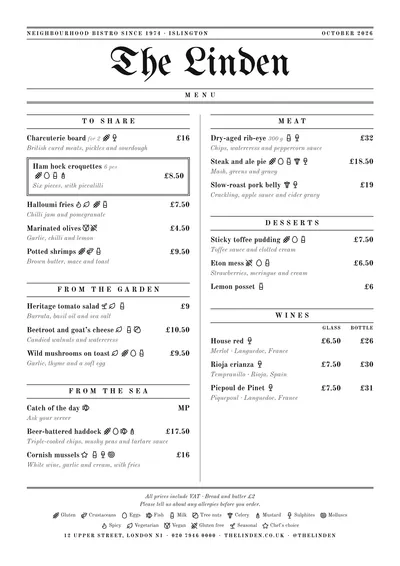 Gazette
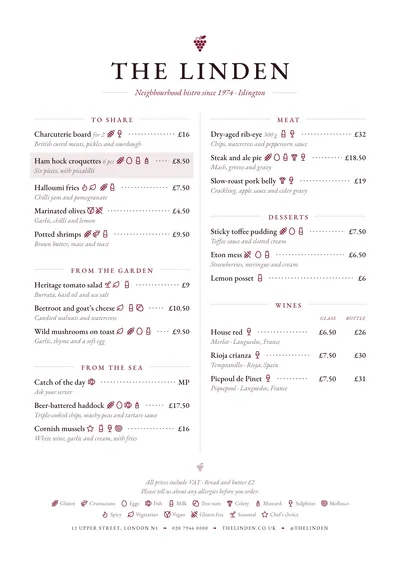 Bodega