The official list
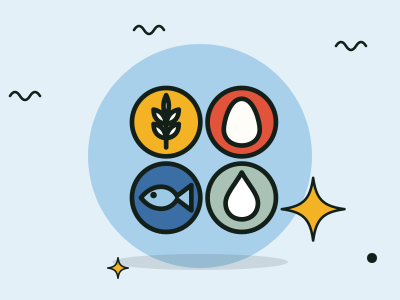
Annex II of Regulation (EU) 1169/2011 lists 14 substances or products that cause allergies or intolerances. It applies across the EU and, as retained law, in the UK. It’s the list you have to declare, both on packaged products and on the dishes you serve. The Annex order is the one almost every numbered menu uses, so it’s worth sticking to.
The 14 and where they hide
| No. | Allergen | What it covers | Where it turns up unannounced |
|---|---|---|---|
| 1 | Gluten | Wheat (including spelt and Khorasan), rye, barley, oats | Batter on fish and onion rings, gravy and white sauce thickened with flour, breadcrumbs on Scotch eggs and fishcakes, sausages (rusk), Yorkshire puddings, stuffing, croutons, soy sauce, beer |
| 2 | Crustaceans | Prawns, shrimp, crab, lobster, langoustines, crayfish | Prawn cocktail, shellfish stock and bisque, fish pie, paella, shrimp paste in Thai and Malaysian curry pastes |
| 3 | Eggs | Eggs and products made from them | Mayonnaise and tartare sauce, aioli, hollandaise and béarnaise, batter, egg wash on pies and pastry, Yorkshire puddings, fresh pasta, meringue, custard, ice cream |
| 4 | Fish | All fish | Worcestershire sauce (anchovies), Caesar dressing, Asian fish sauce, anchovies on pizza, kedgeree, fish stock, crab sticks (surimi) |
| 5 | Peanuts | Peanuts and products made from them | Satay, pad thai, groundnut oil, some curries, bar snacks, peanut butter in cookies and brownies, chocolate bars and desserts |
| 6 | Soybeans | Soya and products made from it | Soy sauce, tofu, edamame, miso, teriyaki, soya lecithin in chocolate and factory bread, veggie burgers and sausages, soya milk |
| 7 | Milk | Milk and dairy products, including lactose | Butter in sauces and mash, white sauce, cheese, cream, ghee in curries, bread and pastries, some sausages and cooked meats, ice cream, milk chocolate |
| 8 | Tree nuts | Almond, hazelnut, walnut, cashew, pecan, Brazil, pistachio, macadamia | Pesto, kormas and curries thickened with ground almonds or cashews, praline, frangipane and Bakewell tart, marzipan, baklava, Waldorf salad, nut oils |
| 9 | Celery | Celery stalks, leaves, seeds and celeriac | Stocks, soups and stews, bolognese, stock cubes and gravy granules, celery salt, Bloody Mary |
| 10 | Mustard | Mustard seeds, powder, liquid mustard and products made from them | Dressings and vinaigrettes, mayonnaise and burger sauces, honey-mustard glazes, piccalilli, marinades, curries |
| 11 | Sesame | Seeds and products made from them | Burger buns, hummus (tahini), seeded bread, Asian dressings, sesame oil, halva, sushi |
| 12 | Sulphites | Above 10 mg/kg or 10 mg/l, expressed as SO₂ | Wine, beer, cider, vinegar, pickles and chutneys, dried fruit, frozen prawns, many British sausages and burgers |
| 13 | Lupin | Lupin and products made from it | Lupin flour in some breads, pastries and gluten-free products, especially from continental Europe; lupin beans as a snack |
| 14 | Molluscs | Bivalves, cephalopods and snails | Mussels, oysters, scallops, clams, cockles, whelks, squid and calamari, octopus, cuttlefish, snails, oyster sauce, seafood stock |
The table is a guide: what counts is the label or specification sheet of every product you buy.
In the US. The FDA’s major food allergens are nine: milk, eggs, fish, crustacean shellfish, tree nuts, peanuts, wheat, soybeans and sesame (added on 1 January 2023 by the FASTER Act). Celery, mustard, lupin, molluscs and sulfites are not major allergens there. Sulfites still have to be declared on packaged food labels at 10 ppm or more, and since 1986 they can’t be used on fresh fruit and vegetables meant to be eaten raw. Since January 2025 the FDA’s tree nut list has twelve nuts, pine nuts included, and coconut is no longer on it; “milk” also covers goat’s and sheep’s milk, and “eggs” covers duck and quail eggs.
Points worth getting right
Milk isn’t the same as lactose. Lactose intolerance and cow’s milk protein allergy are different things. A dish made with lactose-free milk still contains allergen 7.
Crustaceans and molluscs are separate. A prawn is a crustacean (2); a squid or a mussel is a mollusc (14). Some people react to one and not the other, so a seafood paella usually has both.
Some nuts aren’t on the list. Pine nuts and coconut aren’t among the tree nuts in Annex II. You don’t have to declare them, but some people are allergic: if asked, answer precisely.
Some derivatives are exempt. The regulation itself excludes some highly processed products, such as certain wheat-based glucose syrups or fully refined soya oil. Don’t try to work it out yourself: if the product label declares an allergen, carry it over to your menu.
“Gluten-free” has a legal limit. You can only use the claim if the food doesn’t exceed 20 mg/kg of gluten. In the kitchen, a shared fryer or chopping board can ruin it.
How to use this list in your kitchen
- Check the labels of everything you buy ready-made: stocks, sauces, sausages and cooked meats, bread, desserts, ice cream.
- Write down your recipes, including sides and the bread served alongside.
- Mark the allergens dish by dish, separating what a dish contains from what it may contain as traces.
- Check again every time you change a recipe or a supplier.
In MenuDesign, as you type a dish the app may suggest allergens from words like these (batter, aioli, pesto, prawn…). They’re only suggestions so nothing slips through: you’re the one who confirms, with the recipe in front of you, what each dish contains. Each allergen also has its own page, from gluten to molluscs, and there’s a guide to showing allergens on your menu. If you’re unsure how the rules apply to you, ask your local environmental health team.
Frequently asked questions
What are the 14 allergens?
Cereals containing gluten, crustaceans, eggs, fish, peanuts, soybeans, milk, tree nuts, celery, mustard, sesame, sulphur dioxide and sulphites, lupin and molluscs. They're listed in Annex II of Regulation (EU) 1169/2011, which also applies in the UK.
Are pine nuts one of the 14 allergens?
Not in the UK or the EU. The tree nuts on the list are almonds, hazelnuts, walnuts, cashews, pecans, Brazil nuts, pistachios and macadamias. Even so, some people are allergic to pine nuts, so answer accurately if asked. In the US, pine nuts do count as a major allergen.
Does a dish made with lactose-free milk contain the milk allergen?
Yes. Lactose-free milk still contains the milk proteins, which are what cause the allergy. You must mark milk all the same.
Does wine contain allergens?
Practically all wines contain sulphites above the legal threshold. Some also declare egg or milk on the label because of the products used to clarify them; if so, carry that over to your menu.
What are the major allergens in the US?
Nine: milk, eggs, fish, crustacean shellfish, tree nuts, peanuts, wheat, soybeans and sesame, which was added on 1 January 2023. Celery, mustard, lupin, molluscs and sulfites are not major allergens there.