A tin of sardines
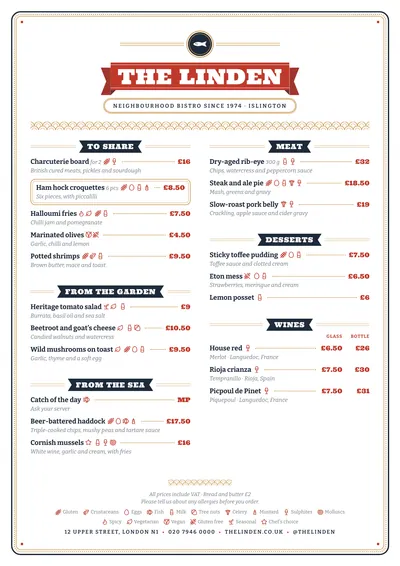
Tinned turns your menu into the label of an old tin. A triple frame with rounded corners (navy, gold beading and a fine rule) runs round the page. At the top there is a medallion with a fish; below it, the venue’s name in Ultra, a very heavy slab serif, on a red ribbon with swallowtails and folds. The subtitle sits in a double-ruled cartouche, and a band of gold scales separates the header from the menu.
Section titles sit on small navy ribbons between gold rules. Dishes are set in Bitter, with descriptions in italics, dot leaders and prices in red.
The menu it suits
Vermouth bars, tinned fish bars, tapas bars, seafood bars and delis with a counter. Give the size of each tin next to its name so the price makes sense, and put the origin in the description: “White tuna belly from the Cantabrian Sea, in olive oil”.
A vermouth bar can fit vermouths, tins and tapas on a single sheet, with price columns where needed (glass and bottle, small and large).
Formats where it shines
- Two-column A4: the full menu inside its frame.
- A3 poster: behind the bar, like the poster of an old canning factory.
- Booklet: with a cover, for a long list of tins.
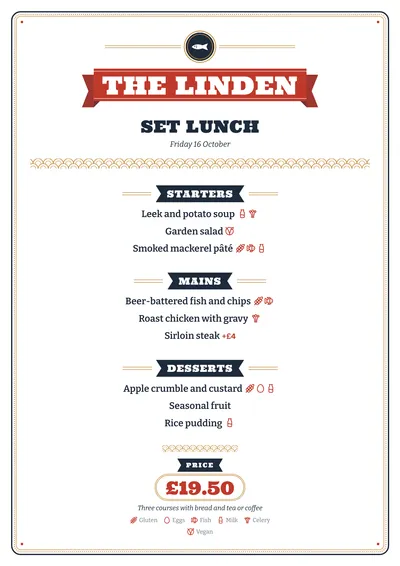
- Daily menu: the ribbon with the name heads the page and the price sits in a gold-ruled cartouche.
If you want the same aperitif feel with less ornament, compare it with Vermouth. For fish-market produce, try Market.
Tips to get the most out of it
- Give the size of each tin next to the name (120 g, 8/10 pieces) so the price makes sense.
- The fish medallion only appears if you don’t upload a logo.
- The antique gold of the frames and scales is fixed; the navy ink and the red accent can be changed.
- A vermouth bar can fit vermouths, tins and tapas on a single A4 sheet.
Colours, fonts, columns and format can all be changed in the editor without losing the design. It works on A4, US Letter, slim A4, A5, booklet, tri-fold, A3 and images for social media.
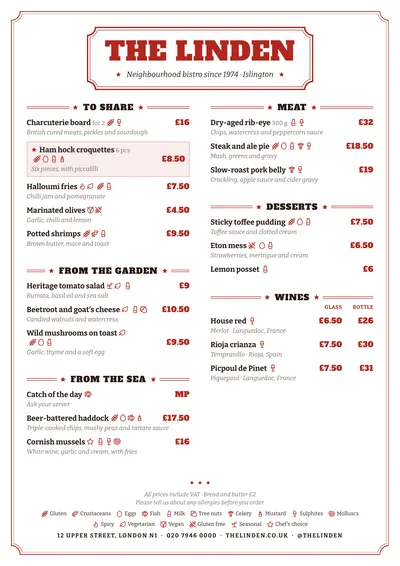 Vermouth
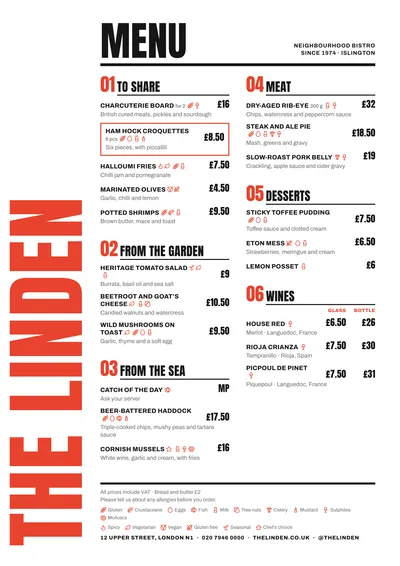 Poster
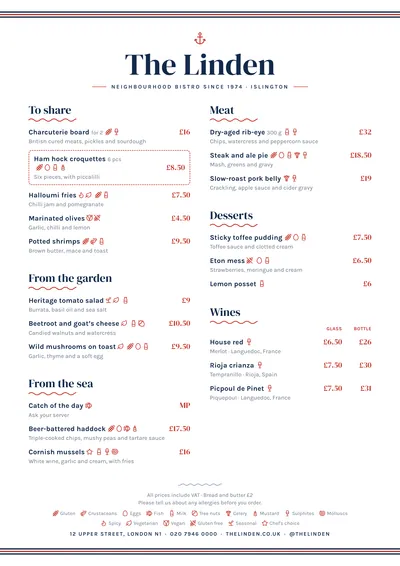 Mariner
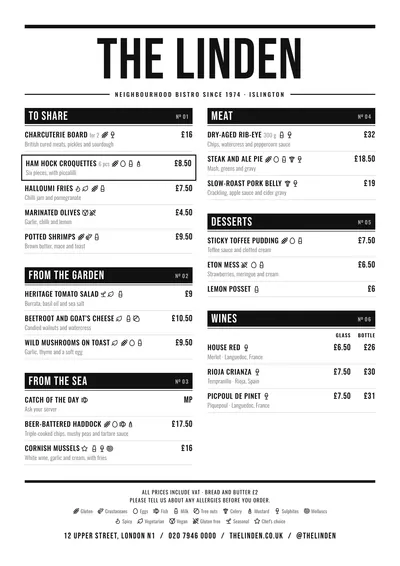 Counter